Plastic Chair Mold
inquiry
1 Piece (MOQ)
Product Details




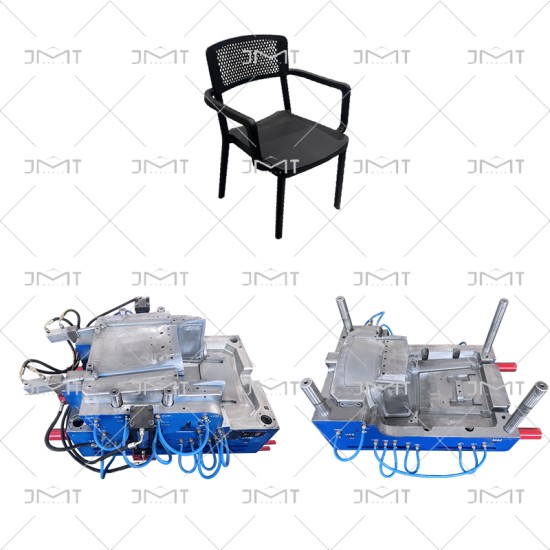


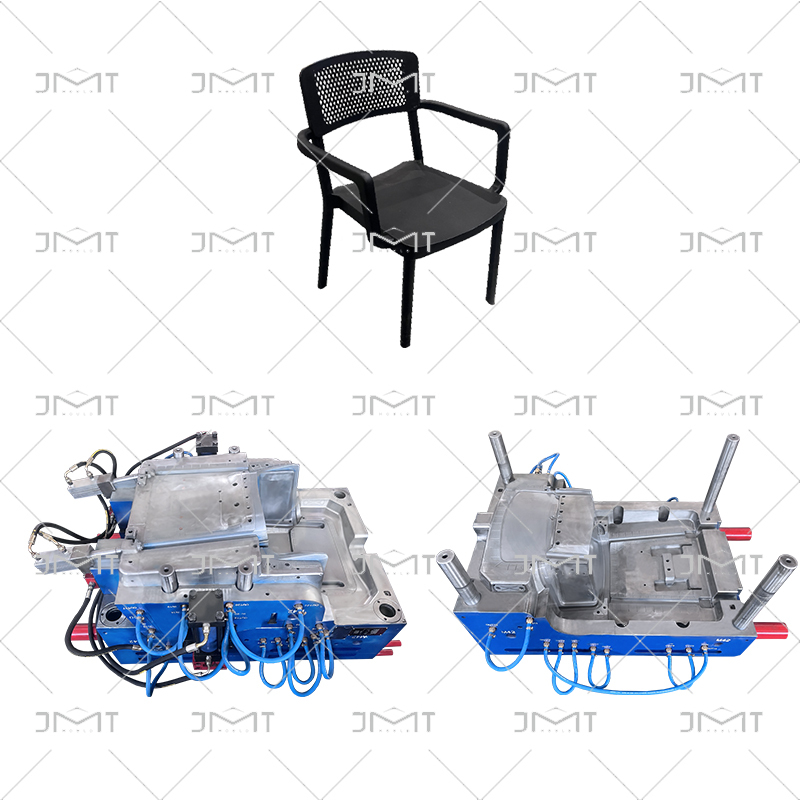
Plastic chair mold is a mold specially used for the production of plastic chairs, usually using an injection molding process. The following is a detailed description.
| Plastic resin | PP+GF |
| Mould dimension (mm) | 1235*835*760 |
| Mould weight (T) | 5900 KG |
| Injection machine Ton | 1000T |
| Mould cavity steel | Chinese 718H |
| Mould core steel | Chinese 718H |
| Gate system | 1 tip Chinese hot runner open gate |
| Mould life | 1,000,000 shots |
Materials
Mold material: Generally use high-strength steel (such as P20, H13, etc.) or aluminum alloy to ensure the durability and processing accuracy of the mold.
Finished materials: Commonly used plastic materials include polypropylene (PP), polystyrene (PS), polyurethane (PU), etc., with good strength and toughness.
Design
Shape and structure: The design of the chair needs to be ergonomic and provide a comfortable feeling of sitting. Mold design includes seat, backrest, armrest and other parts to ensure that the shape and dimension of each part is accurate.
Versatility: Chairs can be designed to be stackable, detachable or multi-purpose to meet different market needs.
Function
Efficient production: Injection molds can achieve rapid prototyping, suitable for large-scale production, improve production efficiency.
Precision: Precision machining ensures that each chair is the same size and shape, reducing the scrap rate in the production process.
Apply
Business and family: widely used in restaurants, cafes, offices, families and other places to provide a variety of chair choices.
Outdoor and indoor use: Chairs suitable for indoor or outdoor use can be produced according to different designs and materials.
Environmental considerations
Recyclable materials: More and more chair molds are starting to use recyclable plastic materials to reduce environmental impact.
Degradable options: Some mold designs consider the use of bio-based plastics to promote sustainable development.
Production process
Injection molding: The plastic particles are heated and melted, injected into the mold by the injection molding machine, and cooled to form the finished chair.
Secondary processing: Sometimes it is necessary to carry out follow-up treatment, such as spraying, hot pressing, etc., to enhance the appearance and function of the chair.
Maintenance and maintenance
Regular inspection: The mold needs to be checked regularly during use to ensure its accuracy and service life.
Cleaning and maintenance: The mold surface should be kept clean to avoid plastic residue affecting the molding effect